
Online Divorce
Divorce smartly without a lawyer. Save yourself $10,000+.
- 100% Legit Divorce Program
How to Switch a Contested Divorce to an Uncontested Divorce?
There really is not a true conversion from a contested divorce to an uncontested divorce in California. A contested divorce means a divorce that went to trial.
In the situation that parties settled their matter during the trial, this case would then become an uncontested case. Learn more about the difference between these 2 types of divorce.
Most people think of a contested case as a case in which the spouses are in dispute. However, nearly all types of divorces have at least one issue in which there is an initial disagreement. And, typically, these are resolved. That is because the entire judicial system focuses on moving parties toward resolution rather than trial.
If you are in a contested case, the judge will issue a Judgment that becomes the final court order. If you are uncontested, you and your spouse entered a marital settlement agreement (aka MSA) or stipulated judgment.
This functions as the ultimate indicator that you and your ex-spouse have shifted from litigation to collaboration. Also, if your case is relatively straightforward, then you can proceed with either an uncontested divorce, divorce without a lawyer, summary dissolution or go through the process yourself with our expert led and fully guided DIY divorce.
Deciding the smarter option can lead you and your family to more successful divorce and empower you to take control of divorce and end marriage peacefully. Start your divorce with The Complete Divorce and move forward with confidence.
Start your FL-100 Petition. Our software is easy to use – led by California divorce attorney, Dina Haddad.
These two answers rebuild the rest of the interview. Whole sections appear or disappear — you'll never be asked something that doesn't apply to you.
Every answer saves the moment you type it. Close the tab, come back next week, land on the same question.
These two answers tick the case type and the residency box on page 1 of FL-100. Next come your dates.
The date of separation is when you decided to no longer be married (both by words and actions).
The date of separation must be after the date of marriage.
These five answers fill page 1 of FL-100 — the case type, the residency box, both dates and the children box. Print the form from the panel on the right and they are already on it.
Building your FL-100…
Warning
To file for divorce in California, at least one spouse must have lived in the state for six months and in the county where filing for at least three months to file for divorce. This doesn't apply to legal separation. Consider changing your response.
Divorce Expert Dina Explains 3 Ways to Switch from Contested Divorce to Agreement
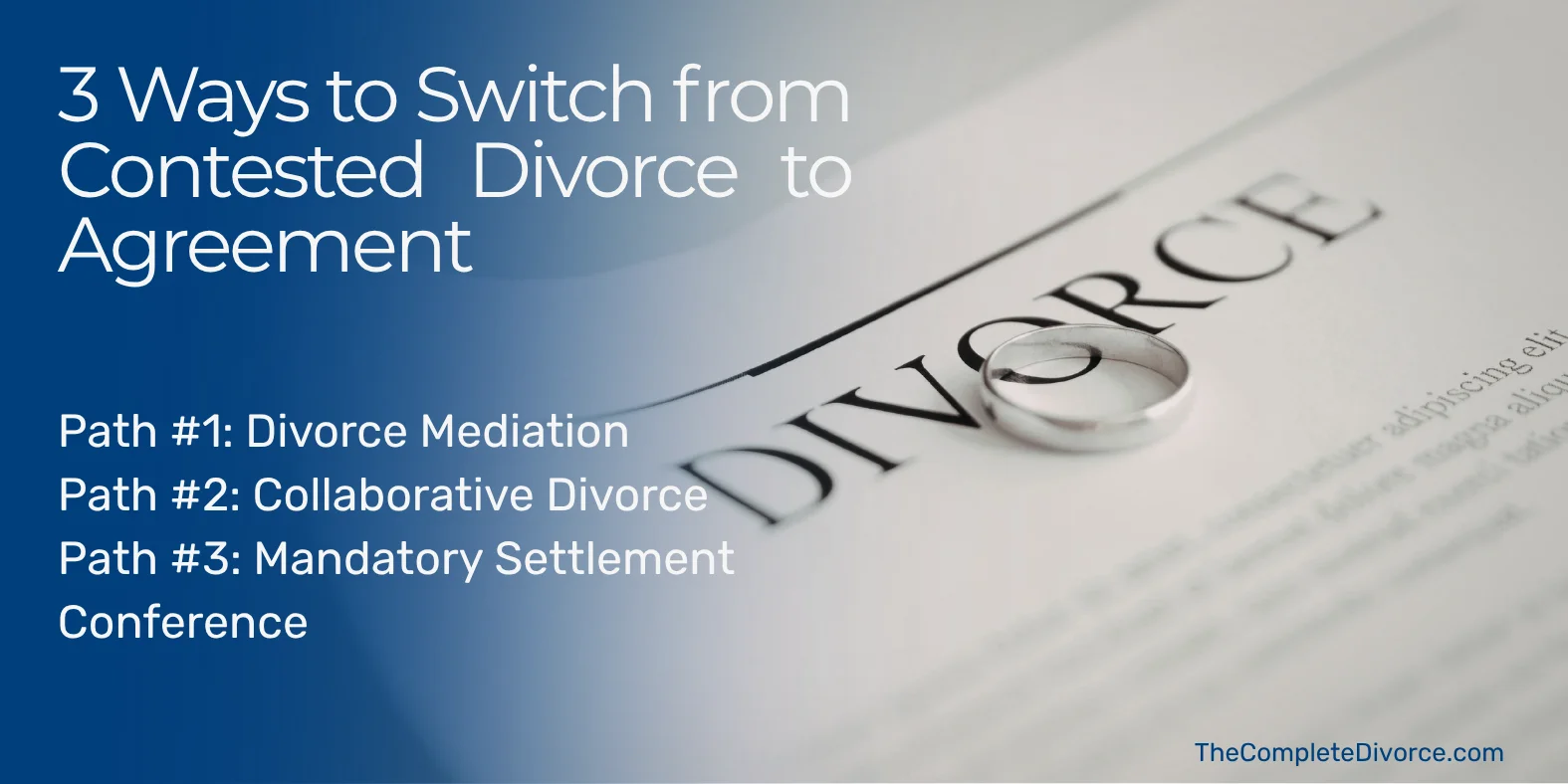
Once you and your ex-spouse have agreed on all of the terms for your divorce, your case will move away from the court’s trial schedule and toward reaching a Final Judgment. Here are the three most common paths to get there.
Path #1: Divorce mediation
Divorce mediation facilitates communication between spouses with the assistance of a neutral third-party. This mediator has no authority to render decisions regarding either spouse’s rights or interests; instead, he/she provides guidance to each spouse to facilitate the development of mutually acceptable agreements.
As such, many family courts support mediation as a means of reducing the level of hostility/contempt associated with litigated cases and providing a way for disputes to be resolved outside the court system.
Additionally, mediation is generally a less expensive and time-consuming option than litigation. For more on mediation, you can book a free consultation with California divorce mediation experts.
Path #2: Collaborative divorce
In a collaborative divorce each party has their own lawyer; however, these lawyers will only help their client negotiate and settle out-of-court.
The parties have agreed prior to starting the process that they will fire their attorneys if the case goes to trial. This puts significant pressure on the parties to resolve their case.
Collaborative divorces work for couples with relatively complex cases, yet prefer to stay away from litigation.
There is no one-size-fits-all cost structure for collaborative divorce as costs depend upon the hourly rate of the attorneys involved, the amount of time spent negotiating, and the complexity of the parties’ financial situation(s) and/or child custody issues.
Learn More: Collaborative Divorce vs Mediation in California
Path #3: Mandatory settlement conference
Once an attempt at early resolution fails, the Court may set a Mandatory Settlement Conference (MSC). A Judge or experienced family law attorney facilitates negotiations in an effort to get both sides closer to resolving their differences before going to trial.
MSCs are typically scheduled for a short period of time and are structured. If both parties reach an agreement during the MSC, it can be memorialized and used to complete the finalization of their case. If both parties do not come to an agreement, then the parties’ case continues to move through the trial process.
How Do You Actually Change Your Case? (The Step-by-Step Filing)
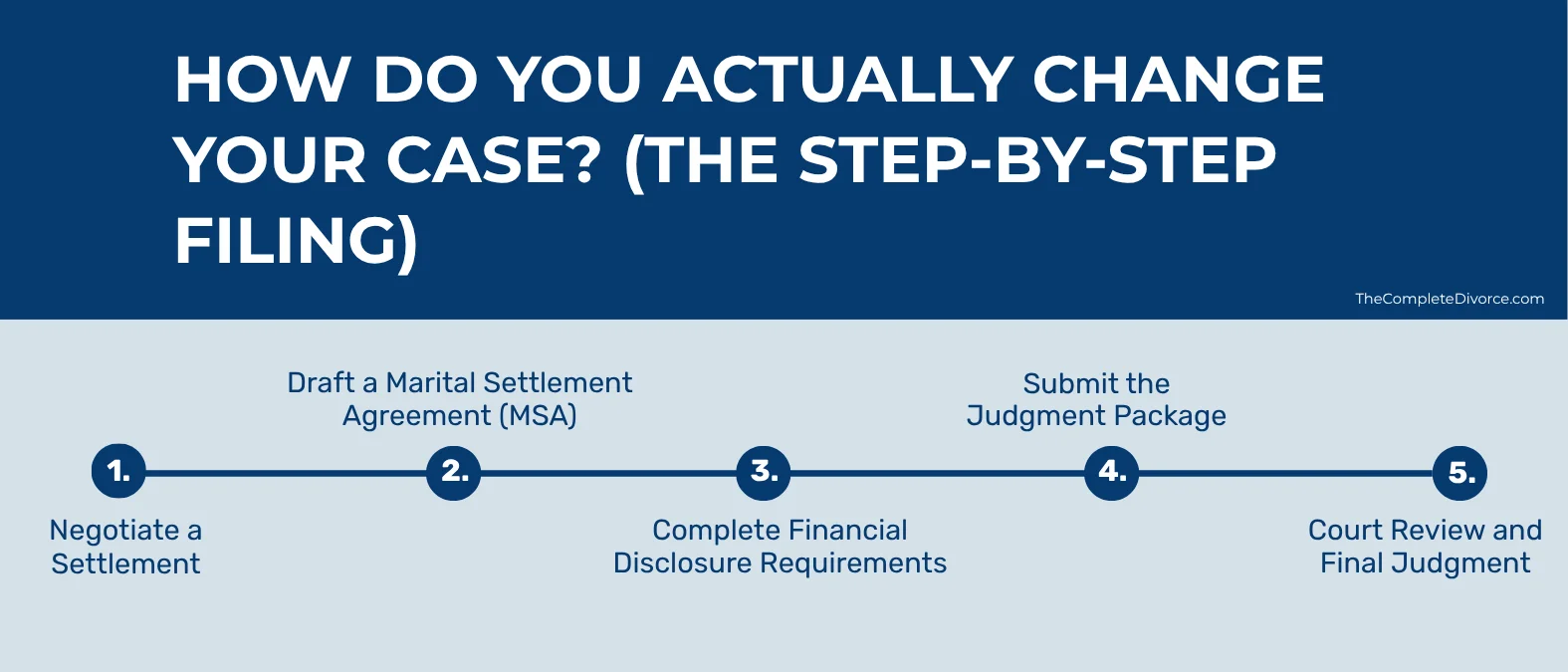
Once you have reached an agreement with your spouse, your case will become uncontested when you file the necessary paperwork as described by California Courts procedures.
- Negotiate a settlement: Finalize all matters with your spouse regarding property division, debt resolution, spousal support and custody/visitation arrangements. There are three methods that can assist you in achieving this: mediation, collaborative divorce and/or a settlement conference.
- Draft a Marital Settlement Agreement (MSA): Create a written document outlining all the terms that were agreed upon by both parties. Your MSA will control the terms of your final judgment, and it will eliminate the need for either party to proceed to trial.
- Complete financial disclosure requirements: Both spouses will exchange their financial information. After exchanging this information, each spouse must submit proof of disclosure (FL-141) to the court prior to being granted judgment.
- Submit the judgment package: File your signed agreement along with forms like FL-180. In some cases, FL-170 may also be included, depending on how your case was filed.
- Court review and final judgment: Each spouse submits their signed MSA and other applicable documents such as FL-180. In certain situations, FL-170 may also be submitted, depending upon how your case has been filed.
Simplifying California Divorce for Families
Once you agree on all issues and sign a marital settlement agreement (MSA), even if you had court hearings or started a trial but did not finish it, your matter will be considered uncontested.
Mediation and/or structured systems such as The Complete Divorce can help you organize and reduce conflict while working toward a final resolution. These systems keep you out of court, save you time and money, and have the best chance at leaving you with a high quality agreement.
Subscribe and start your divorce with The Complete Divorce and get the support you need through our fully-assisted DIY program.

Written By:
Dina Haddad
Divorce Attorney — Mediator & Founder of The Complete Divorce
“Hi. I’m Dina Haddad, a divorce attorney-mediator here in California. I’m so tired of couples not having a process that’s easy to complete their divorce. They are getting lost, wasting time and money, and beyond frustrated with their results.
That’s why I created The Complete Divorce, California’s premier online divorce program. I took my successful mediation practice and condensed it into an affordable and winning program.”
FAQ — Switch a Contested Divorce to an Uncontested Divorce
Q. Can I change my contested divorce to an uncontested one online?
Yes. You can create your marital settlement agreement (MSA) and all required forms online, then file once you both agree. The Complete Divorce walks you through everything you need and ensures you file correctly at home.
Q. Do both spouses have to agree to switch?
An uncontested divorce requires both of you to fully agree. That means both of you must sign the settlement agreement and complete the required filings, including full proof of each other’s disclosures, typically, that’s form FL-141, before the court will approve your case.
Q. What if we switch to uncontested but then start fighting again?
There really is not a true conversion from a contested divorce to an uncontested divorce or an uncontested divorce to a contested divorce. The designation is not known until the end of the case. A contested divorce means a divorce that went to trial. An uncontested case means the matter settled by agreement. In the situation that parties settled their matter during the trial, this case would then become an uncontested case.
California premier divorce program.
Making California divorce simple and lawyer-free.
- Filing & Review Support
- 1-on-1 Divorce Meeting
- Child support calculations
- MSA Filing Support
 ⭐⭐⭐⭐⭐
⭐⭐⭐⭐⭐
2000+ divorced without a lawyer.
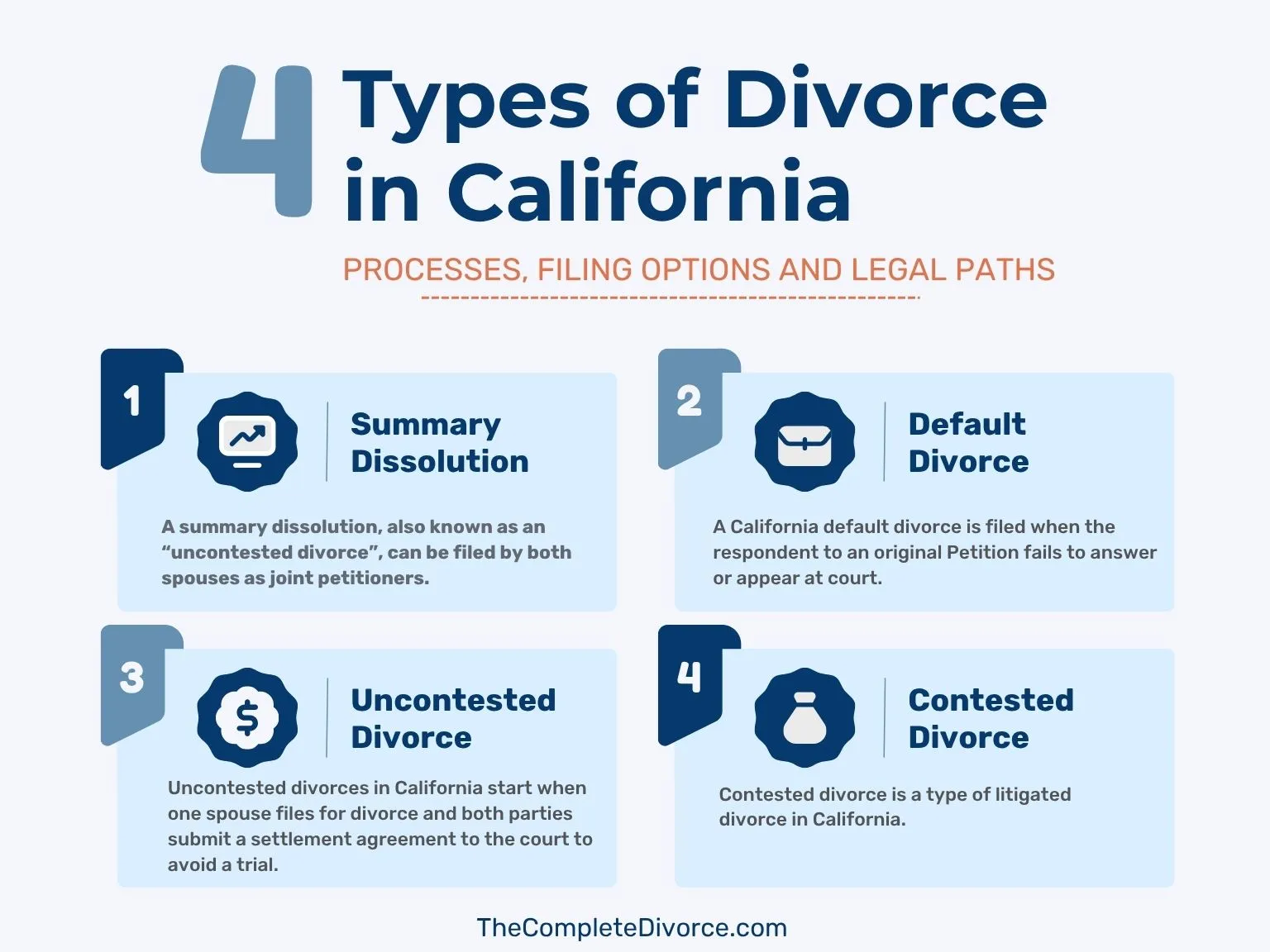
Explore the different types of divorce in California, including uncontested,

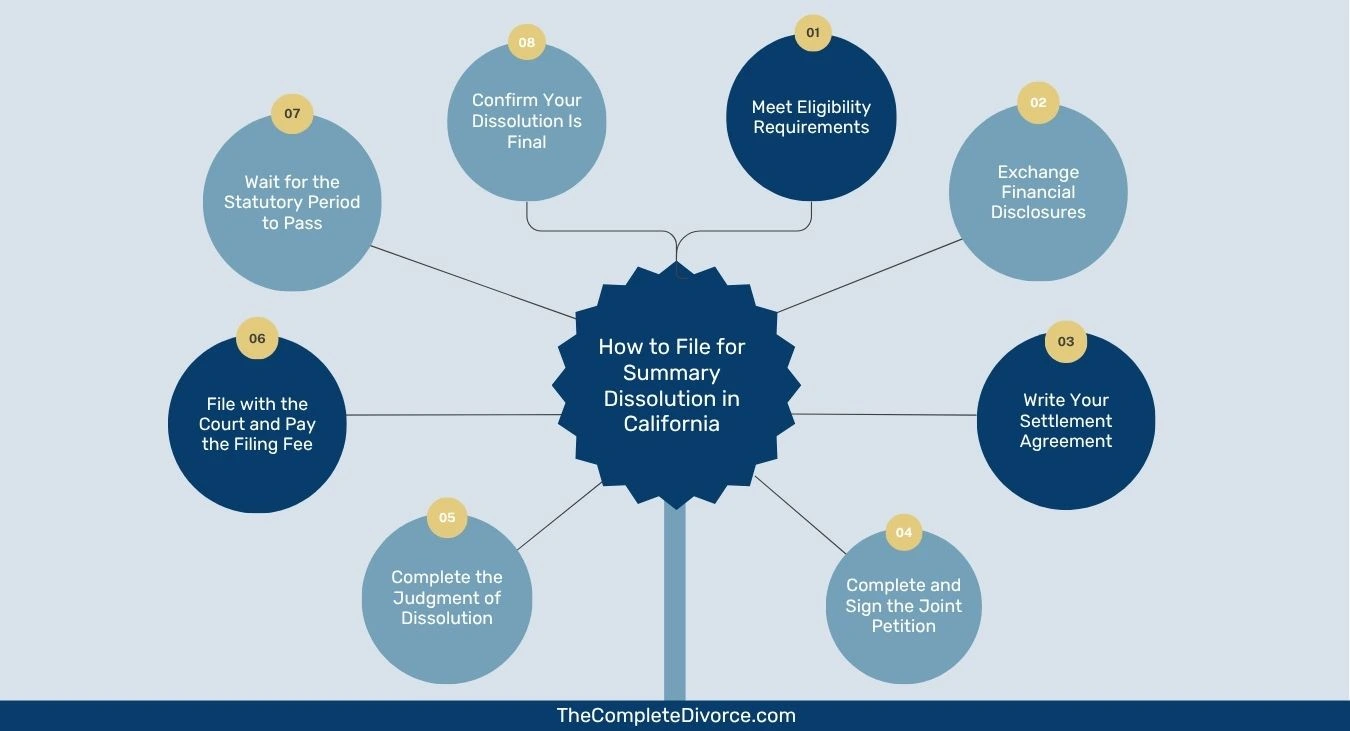
Not every California divorce means court dates, mountains of paperwork,